Skaguay
The Call of the WildSkaguay is the principal human threshold between the southern world and the dangerous northern routes of the Klondike Gold Rush. For Buck, it is never merely a place of arrival or departure: it is where his abduction becomes a transport career, where laboring bodies are exchanged when they are judged economically useless, and where his value is publicly measured before the wilderness claims him more completely.
Gateway to the North
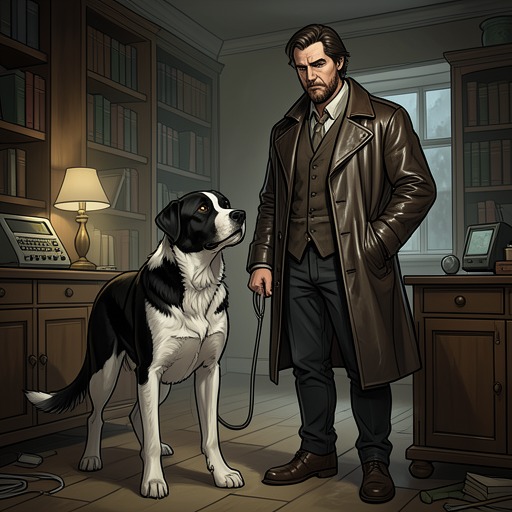
Skaguay first appears as the destination of Buck’s removal from the Southland. After Manuel betrays him for gambling money, Buck is taken through College Park, sold, and carried north with Curly aboard the Narwhal. The journey ends at Skaguay, where the receding town marks the last sight Buck has of the warm Southland. There, Perrault and Francois take charge of Buck and Curly, turning the kidnapped household dog into an animal intended for northern work.
The town’s importance is tied to the extraordinary demand created by the Klondike Gold Rush. Dogs have become expensive because transport and communication depend on them, and Perrault can pay three hundred dollars for Buck with government money while judging him worth far more as a working animal. Skaguay therefore stands at the meeting point of public necessity and private commerce: government dispatches require speed, while the dog himself is treated as a purchasable asset whose price reflects the pressure of the frontier economy.
The Mail Route and the Record Run
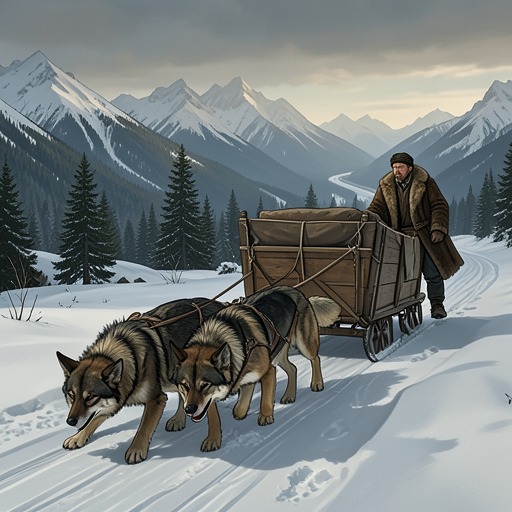
After Buck learns the discipline of the traces under Dave and Solleks and the direction of Francois and Perrault, he travels through the severe routes leading toward Skaguay. The team crosses the Chilkoot Divide, moves past glaciers and deep snowdrifts, reaches Lake Bennett, and survives the open water and unstable ice of the Thirty Mile River. Perrault repeatedly breaks through ice bridges, while Buck and Dave are once dragged from a submerged sled, half-frozen and nearly drowned. These routes make Skaguay the terminus of a logistical ordeal in which dogs and men risk their lives to move official communications.
The return to Skaguay becomes a record mail run. Over fourteen days, the team averages forty miles a day, covering the distance under hard conditions and arriving at the town after an exceptional push. For three or four days, Perrault and Francois are celebrated in Skaguay, while the team becomes the center of an admiring crowd of dog handlers and mushers. The public excitement is temporary, however. Official orders soon separate Buck from both men: Francois embraces him and weeps, and then he and Perrault disappear from Buck’s life.
Exhaustion and Commercial Disposal
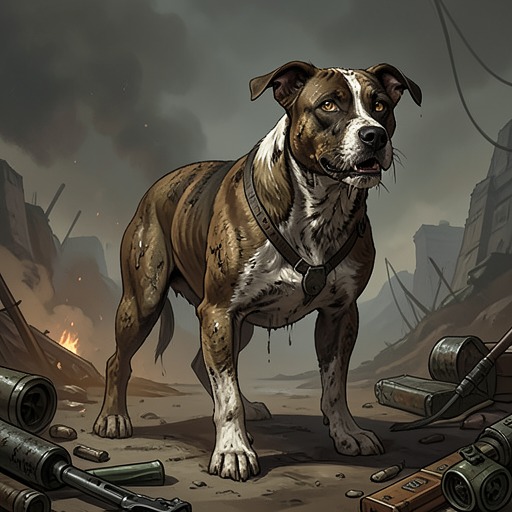
Buck later returns to Skaguay with the Salt Water Mail after thirty days on the trail. The team is no longer celebrated as a record-breaking unit but arrives worn down almost beyond recovery. Buck’s weight has fallen from one hundred and forty pounds to one hundred and fifteen. Pike is genuinely lame after years of feigning injury, Solleks limps, Dub has a wrenched shoulder blade, and all the dogs are painfully footsore. In less than five months they have traveled twenty-five hundred miles, with only five days of rest during the last eighteen hundred miles.
The dogs expect rest, and the drivers believe that justice requires it after covering twelve hundred miles with only two days of respite. Skaguay instead exposes the pressure of the mail economy. Too many people have rushed north, while their absent relatives and dependents have generated a vast accumulation of mail. Official orders demand fresh Hudson Bay dogs, and animals considered worthless for the trail are to be sold because dogs count for little against dollars. After three days, Buck and his companions are bought cheaply by Hal and Charles, with Mercedes accompanying them. The purchase takes place in Skaguay as another commercial exchange, but this time the town’s market transfers the exhausted team into incompetent hands.
A Public Measure of Buck’s Strength
Skaguay later provides the setting for the wager that reveals how completely Buck’s reputation has changed. In a saloon, Matthewson challenges John Thornton’s claim that Buck can start and haul a thousand-pound load of flour for one hundred yards. Matthewson places a thousand dollars of gold dust on the bar, forcing Thornton to confront both the magnitude of the challenge and his inability to cover the bet. The episode turns Buck’s strength into a spectacle and a financial proposition, yet it also exposes the trust between dog and man: Thornton’s confidence rests on intimate knowledge of Buck rather than on the casual boasting of the spectators.
Buck succeeds and earns sixteen hundred dollars for John Thornton in five minutes. The feat enables Thornton to pay his debts and join Hans and Pete on the journey east in search of the lost mine. Skaguay thus becomes the place where Buck’s physical labor is converted into the capital that frees Thornton from immediate financial pressure and makes the larger expedition possible.
Threshold Between Commerce and Wilderness
Skaguay’s repeated appearances organize Buck’s passage through different systems of value. At first, the town belongs to the world that buys and sells him: the money exchanged for his body, the government’s demand for dispatches, and the sale of exhausted dogs all make him an economic instrument. Yet the same town also witnesses the recognition of his extraordinary capacity, when his labor is no longer merely consumed but becomes the basis for Thornton’s renewed independence.
Beyond Skaguay lie the routes of ice, river, mail, and gold; farther still lies the wilderness in which Buck hunts, encounters the moose, and finally answers the wolf pack after John Thornton’s death. The town therefore functions as a recurring boundary. It is the northern settlement where Buck is repeatedly assigned a price, but also the last organized human station before labor, ownership, and public judgment yield to the older demands of survival and the wild.